
The Singularity Is Not a Moment: It Is a Transfer of Judgment
The singularity is often treated as a future moment when machines surpass humans. This essay argues it’s already arriving in a quieter form: as a transfer of judgment. Through everyday examples—education, interfaces, decision systems—it explores how AI can make the world efficient yet morally illegible, and why the real risk is not smarter machines but humans who stop insisting on reasons, responsibility, and meaning.
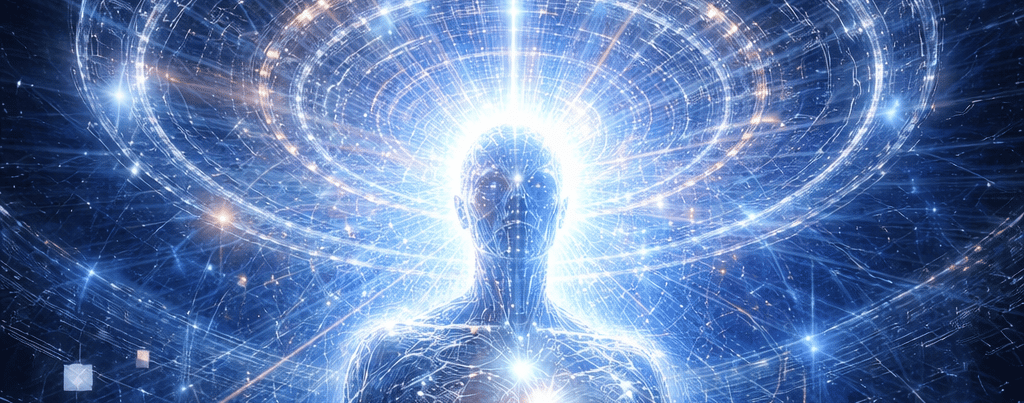
The singularity is usually imagined as a date on a calendar—an approaching cliff. One day, the story goes, machines become smarter than us, improve themselves, and accelerate beyond human comprehension. After that, prediction collapses. History becomes a blur.
This story persists because it is dramatic, because it flatters our love of grand endings, and because it turns a difficult present into a single future event we can either fear or celebrate. It feels clean. It feels like a plot.
But Cybersoul is interested in a different possibility: that the singularity is not a cinematic “takeoff,” but a quieter transition in what humans are willing to delegate. In that reading, the singularity is less about IQ and more about authority. Less about intelligence becoming infinite and more about judgment becoming optional.
The most important question is not whether a machine can think. It is whether we remain the kind of beings who still dare to judge.
To define “singularity” in the broad sense is to say: a point after which the system’s behavior becomes unpredictable to the observer. In mathematics, it can mean a breakdown of ordinary rules. In futurism, it means a breakdown of ordinary forecasting. Yet this definition hides a crucial detail. Unpredictable for whom? In practice, many “singularities” are local. They occur when one domain becomes too fast, too complex, or too internally optimized for human audit. The world doesn’t end; it becomes partially illegible.
Consider financial markets. Long before anyone spoke seriously about superintelligence, markets already began to behave like ecosystems of competing automated agents. Prices moved at speeds no human could track in real time, and “explanations” arrived after the fact, packaged as narratives. Whether or not one calls any specific event a singularity, the deeper pattern matters: systems optimized for speed and advantage can outrun the human capacity to interpret them. The human becomes a spectator to a process that still carries human consequences—pensions, employment, national stability—but is no longer experienced as human decision-making. What changes is not that no one has values, but that values disappear into mechanism.
This is the first way the singularity arrives: as a change in cognition. When systems become too fluent, humans begin to confuse output with understanding. Language models intensify this confusion because they speak in the grammar of reasons. They do not merely give you an answer; they give you something shaped like an explanation. The risk is not only error. The risk is a new comfort: the comfort of coherence. Coherence feels like truth, especially when it arrives instantly and politely.
Now imagine the singularity not in a lab, but in a classroom. A student uses an AI assistant to study philosophy, economics, or literature. The assistant can summarize, paraphrase, generate counterarguments, imitate styles, produce outlines at the click of a button. At first this looks like empowerment, and often it is. A motivated learner can explore faster than ever. But a subtle substitution can occur. The student begins to skip the inner struggle that used to form thought: the moment of not knowing, the slow discovery of contradiction, the uncomfortable task of producing one’s own reasons rather than selecting from pre-made ones. A tool meant to support thinking becomes a tool that replaces the experience of thinking.
If you’ve ever prepared for an essay exam, you know the difference between having ideas and having judgment. Judgment is not mere content. It is selection under pressure. It is deciding which examples are relevant, which interpretations are defensible, which tradeoffs you are willing to make. A system can provide infinite material and still weaken judgment by removing the necessity of choice. In this sense, “superintelligence” would not be the end of human intelligence; it would be the end of human necessity.
The second way the singularity arrives is through interface. People argue about models, but people live inside interfaces. Interfaces do not simply deliver information; they train behavior. They teach you what is easy, what is allowed, what is punished, and what is rewarded. Over time, they form habits of mind.
Take the modern recommendation feed. It does not force you to believe anything. It simply arranges what you will likely see next. The power here is gentle, almost parental. It anticipates your preferences and then shapes them through repetition, until you cannot easily tell whether you chose the content or whether the content chose you. The singularity, in this domain, is not the day the algorithm becomes conscious. It is the day the human no longer experiences their attention as something they govern. The user becomes a field in which optimization operates.
Or consider navigation. A map app is an extraordinary convenience, and no serious person wants to return to pre-digital uncertainty. Yet notice what happens when you follow a route you cannot explain. You arrive, but you do not understand where you are. You know the answer—turn left here, take that exit—without acquiring a map in your mind. The system gives success without orientation. Now scale that pattern to more consequential domains: medicine, law, hiring, policing, education. When success becomes separable from understanding, the conditions of responsibility change.
This brings us to the third way the singularity arrives: through power. The popular singularity narrative implies a dramatic overthrow: machines surpass humans, seize control, and the future belongs to the algorithm. That is a myth with religious structure, almost apocalyptic. But power in modern societies rarely arrives as a coup. It arrives as administration. It arrives as “help.”
Imagine a hospital deploying an AI decision support tool. The tool is not a dictator; it is a recommendation engine for triage, risk prediction, or treatment options. Clinicians can override it. No one is forced. Yet the interface carries authority because it looks statistical, and because the institution prefers consistency. Overrides create paperwork, delays, liability. The system is “advice,” but advice that gradually becomes default. When that happens, the clinician’s identity shifts. They are no longer primarily a judge; they are increasingly an operator. The moral weight migrates from a person to a process.
Or imagine hiring. An AI model ranks candidates, and a recruiter selects from the shortlist. Nobody has to say “no.” The no is implied. When a rejected applicant asks why, the answer is fog: the data, the model, the vendor, the policy. Authority spreads out into a network and becomes difficult to address. In older moral life, you could appeal. You could demand a reason. You could confront a human. In the new moral life, decisions are often made in ways that cannot be fully explained even by those who deploy them. The singularity, in this sense, is a new kind of irresponsibility: not intentional cruelty, but the disappearance of a clear place where responsibility can land.
This is why Cybersoul treats “singularity” less as a forecast and more as a philosophical lens. What the singularity story really expresses is an anxiety about intelligibility. It is the fear that the world will become too complex to narrate, and that once we cannot narrate, we cannot govern. Human beings do not only need outcomes; they need reasons. They need to locate agency. They need to know whether an error is forgivable, whether a harm is accidental, whether a rule can be appealed, whether a decision-maker can be confronted. When systems grow beyond the human ability to provide these moral affordances, society becomes efficient and spiritually thin.
But the singularity is not only a threat. It is also an invitation to maturity. If AI can do more, we can ask better questions about what we actually want. Do we want speed, or do we want understanding? Do we want frictionless convenience, or do we want competence? Do we want decisions to be optimized, or do we want them to be answerable?
A common defense of singularity talk is that it forces us to prepare. Perhaps. Yet there is a trap: preparation becomes another form of convenience. We imagine one future event so we can avoid examining the present habits of delegation. We treat the singularity as a coming storm, so we don’t notice the slow weather already changing.
The more realistic danger is not one sudden threshold where machines become gods. It is a gradual social threshold where humans become passive: where we accept that “the system decided” is the natural end of inquiry. That is the real singularity: a singularity of judgment.
So what would it mean to remain human in an AI age without becoming anti-AI? It would mean insisting that intelligence is not the final virtue. The final virtues are interpretation, responsibility, and meaning. It would mean building interfaces that do not merely persuade, but educate. It would mean designing systems that reveal uncertainty rather than hide it behind smooth language. It would mean preserving the right to appeal, the ability to ask why, and the social expectation that important decisions remain answerable to human reason.
The singularity might still come in the dramatic sense. No honest person can claim certainty about the long-run trajectory of recursively improving systems. But even if it never arrives as a single event, it can arrive as a culture. It can arrive as a habit: the habit of letting the mirror flatter us until we forget what it means to look past reflection and toward truth.
If there is a Cybersoul stance on singularity, it is this: do not worship the moment. Watch the delegations. The future is rarely born all at once. It is trained into us, one convenient choice at a time.